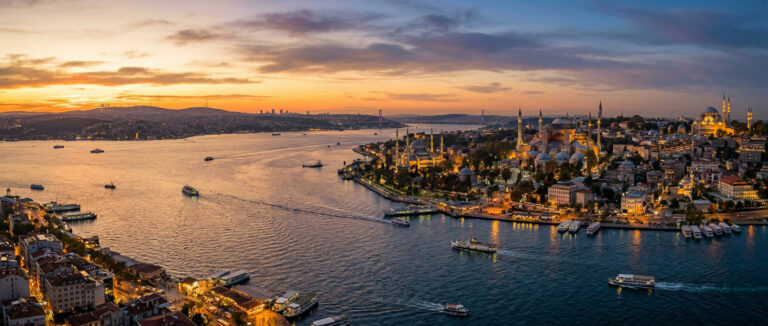
The impression as a whole
Too many layers for one frameWithin the sense of one journey, Türkiye can combine urban life, history, the seaside and the everyday.

Türkiye up close
Deep history, a relaxed coastline, cultural abundance and a vivid sense of daily life come together here in a single, natural travel rhythm.
Istanbul’s skyline, mornings in Cappadocia, the Aegean and Mediterranean shores, the memory Anatolia keeps in stone and the warmth of local tables: together they make Türkiye a country no one label can contain, though you can sense its depth within a short stay.
The intention here is not to fit the country into a single tourist box. Instead, this page tries to make it clearer why Türkiye thrills first-time visitors and why it has the strength, balance and depth that keep drawing people back.
In one and the same country, big-city life, the easygoing coast, nature, history, religious heritage and the warmth of daily life operate side by side. Türkiye is best understood not by looking at these elements in isolation, but by noticing how they connect and how they can unfold together along a single route.
History that runs deep
Along routes like Istanbul, Ephesus, Cappadocia and Şanlıurfa, the past merges into the mood of the present.
A relaxed shoreline
On the Aegean and Mediterranean, the highlights are coves, harbor towns, summer evenings and life lived outdoors.
Tables full of warmth
Breakfast culture, tea, Turkish coffee, local markets and regional cooking bring warmth to the trip.
Routes that bend to you
Brief city breaks fall into place easily, as do longer journeys combining seaside and culture.
The impression as a whole
Too many layers for one frameWithin the sense of one journey, Türkiye can combine urban life, history, the seaside and the everyday.
Where it sits on the map

Lying between Europe, Asia and the Middle East, Türkiye is a powerful link not just in geographical terms but also in cultural and historical ones. Its position accounts for more than a place on the map; it also explains the role of transit, meeting and exchange that the country has played for centuries.
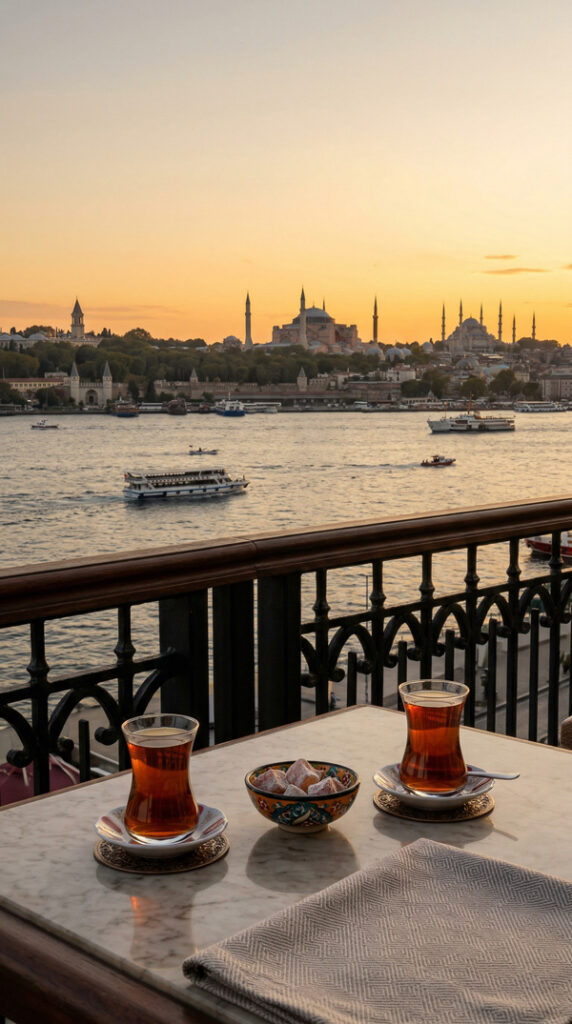
The line of the Bosphorus, laid tables, the evening light and quiet moments of daily life make Türkiye’s great scale feel more intimate and easier to remember.
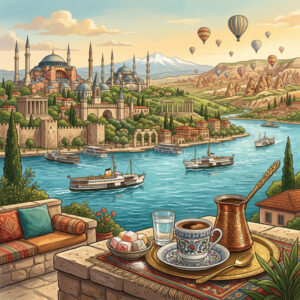
Cities, coastline, history and food culture can share a single visual memory. Together they convey Türkiye’s many-sided nature more quickly.
Why does Turkey feel so distinct?
Turkey’s strength does not lie in excelling at one thing alone; it lies in how naturally its different sides can combine within one travel experience.
Identity
On one hand there are imperial skylines, old city textures, houses of worship, harbors and archaeological memory; on the other, seaside towns, an outdoor rhythm, sunsets, a lighter spirit and a freer lifestyle.
Gravity, history and cultural weight sit on one side; shared tables, tea, coffee, strolls, scenery and the warmth of daily life on the other. Turkey stays in the memory not because each element is strong by itself but because they link up so naturally.
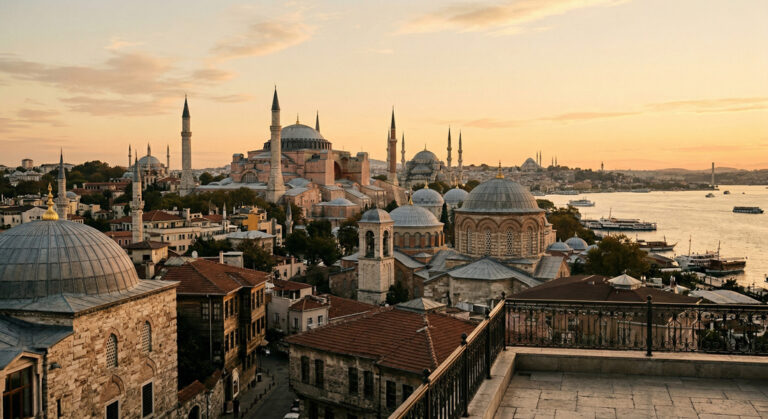
The central thought
This is why one country can offer a visitor real cultural depth, impressive landscapes, a convivial coastal mood and an everyday warmth that invites a closer bond.
Monuments, old neighborhoods, harbors, houses of worship and bazaars do more than exhibit the past: they shape the present-day atmosphere too.
Shores, valleys, plateaus, lakes and mountain roads really do alter the pace of travel and keep the feeling of being on the road alive.
Breakfast, tea, Turkish coffee, meze, regional sweets and local food traditions make the country feel closer, warmer and harder to forget.
City, coast, culture, nature, quick breaks and longer plans can all be combined naturally within one country.
Three great axes of experience
Türkiye is compelling not merely because it has a lot to offer, but because everything it offers can merge into one travel experience without clashing.
Map of the axes
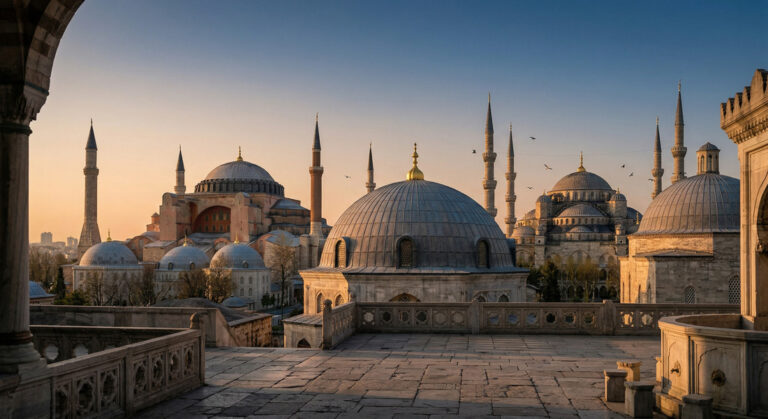
Urban life, history and cultural memory
On the Istanbul–Bursa–Edirne–Konya–Mardin–Şanlıurfa–İzmir–Ephesus line, architecture, belief, commerce, urban memory and the continuity of civilizations reach remarkable depth. It is also the backbone that keeps Türkiye from being a mere list of sights.
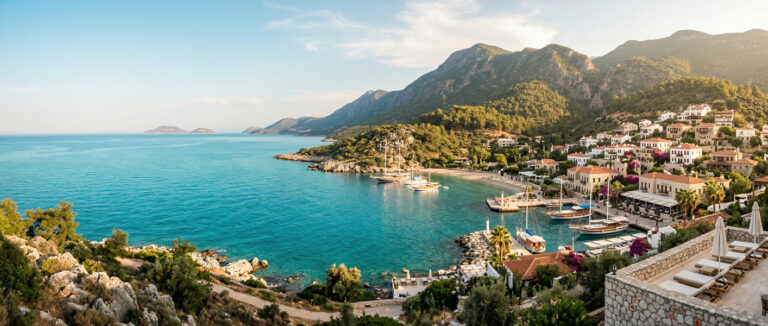
Shorelines and outdoor living
Along a single coastline, Antalya, Kaş, Fethiye, Bodrum, Marmaris, Çeşme and Alaçatı combine the sea, harbors, coves, sunsets, strolls and a tradition of eating outdoors.
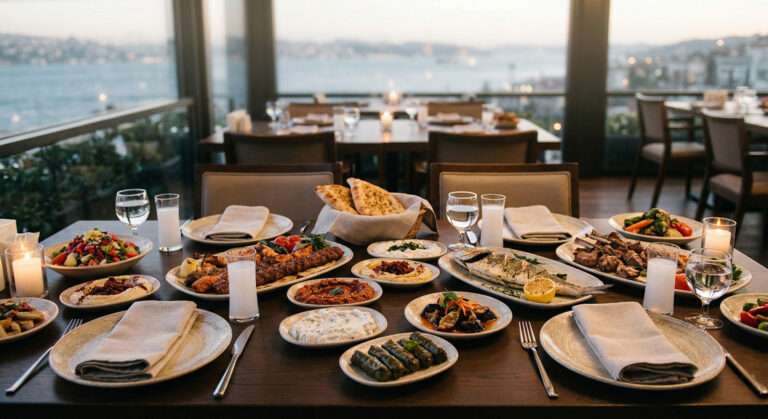
Food, the table and the pace of daily life
From the breakfast tradition, tea and Turkish coffee to meze, kebabs, seafood, regional sweets and local markets, the trip leaves its taste not only on the palate but in the memory as well.
Moving within a single day from historic gravity to coastal lightness, and from cultural discovery to a warm table, gives a trip here a richer, more layered and more memorable quality.
Archaeology & the Past
The historical depth of Anatolia sets Turkey apart from any ordinary destination. Here the past is not locked away in museums; you can see it in the soil, along the streets, in the fabric of cities and in the landscape itself.
Layered civilizations
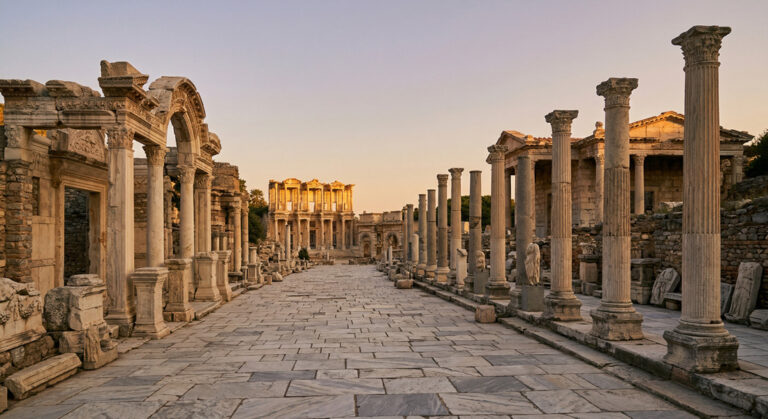
Monuments that remember
Ancient cities such as Ephesus preserve the classical world’s architectural and civic memory, while centers all over Anatolia still show signs of trade, faith, urban life and the continuity of the state. Thanks to this depth, Turkey is meaningful as well as beautiful.
Beyond buildings, this axis lets visitors see how a country built up its layers over history and how those layers still live in its present-day cities.
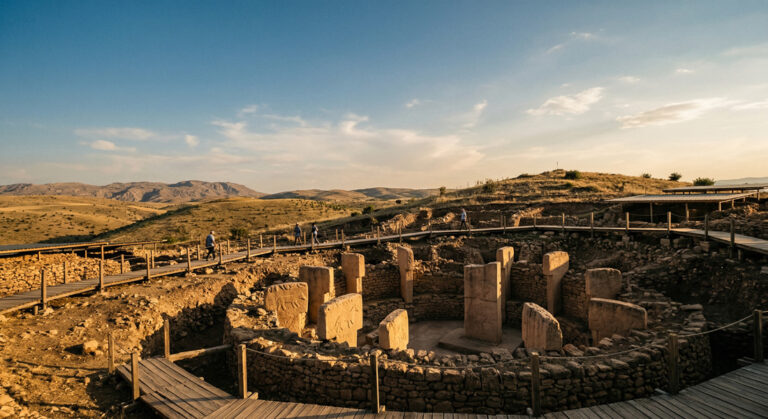
Traces in the earth
Places like Göbeklitepe reach back to far earlier stages of humanity’s past. Such a wide time span gives Turkey’s historical story a character all its own.
Traveling for history in Turkey means more than looking at “old stones.” Visitors also discover how civilizations piled up on one another and how they marked the cities of today.
History in Turkey is therefore not static information but a living layer that broadens the meaning of a journey.
Belief and architectural legacy
Among the elements that most strongly shape Türkiye’s visual memory are domes, minarets, courtyards, fine stonework, historic houses of worship and monumental skylines.
What the eye remembers
Heritage on a grand scale
Hagia Sophia, Sultanahmet, Süleymaniye, Selimiye and historic houses of worship in cities throughout Anatolia display Türkiye’s symbolic strength as clearly as its aesthetic strength. These buildings crown their cities, help people find their bearings and set the mood.
Belief and architectural heritage cannot be separated here. These buildings are not simply things to admire; they are living centers that carry a city’s memory and its historical continuity.
The reach of architecture
In Türkiye, a powerful city skyline is frequently the work of historic buildings. That is what lifts architectural heritage from a tourist detail to a component of the country’s identity.
At this point the country’s aesthetic, historical and symbolic weight emerges simultaneously. It is largely due to this heritage that Türkiye’s skyline stays in the memory.
Route by route
The four route profiles below show why the country does not fit into one holiday template. Turkey’s strength lies in how easily these different moods come together on a single map.
Routes at a glance
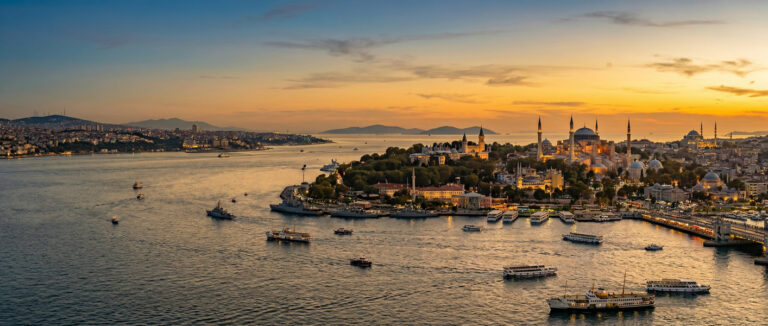
A many-layered city
Skyline, water, motion, history and everyday life sensed all at once.
Istanbul is the best starting point for experiencing Turkey’s cultural weight at full intensity. Imperial traces, the Bosphorus line, ferries, neighborhoods, bazaars and the evening mood make the city not just big but layered and full of life.
Here history spills beyond the monuments into the views, the walks, trade, the city’s rhythm and daily life. That makes Istanbul one of the best gateways to understanding the spirit of the whole country.
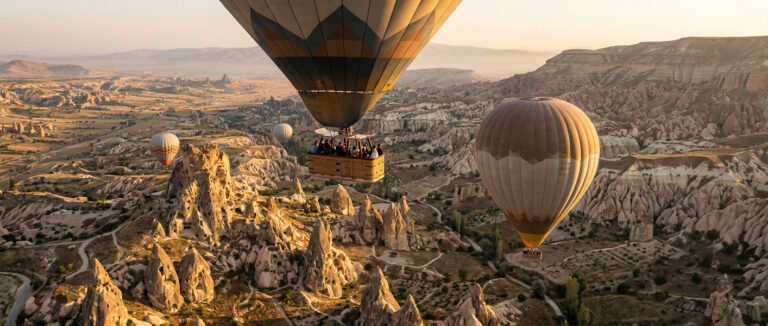
Views from a dream
Rocky valleys, daybreak, wide skies and a quiet visual power.
Cappadocia ranks among Turkey’s most poetic and unusual landscapes. Valleys, rock formations, a heritage of caves and the light of early morning give it an almost timeless quality.
This route reminds you that Turkey is unique in visual, emotional and atmospheric terms, not only historical ones. Cappadocia stands out because it combines silence with visual intensity.
The pace of the shore
Blue bays, harbor towns, the flow of summer and life outdoors.
Together, Antalya, Kaş, Fethiye, Bodrum, Marmaris, Çeşme and Alaçatı showcase Turkey’s sunnier, freer and more sociable side. Here the sea is not a mere view but a key element that sets the pace of everyday life.
Coves, harbors, coastal roads, strolls, sunsets and meals outdoors make this stretch light without being shallow. Turkey’s easygoing side is at its strongest here.
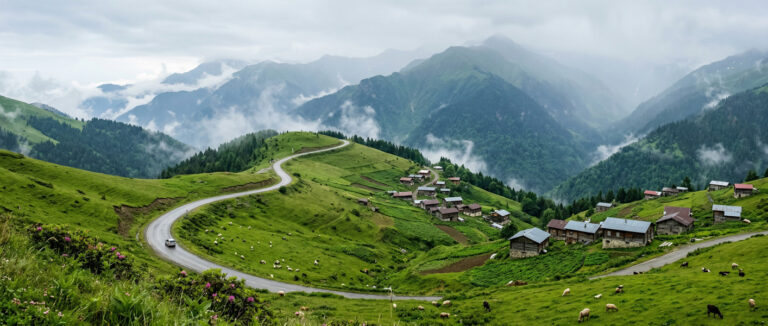
A green, unhurried retreat
Highland pastures, tea gardens, lakes, cool trips and a pause that slows things down.
The Black Sea highlands, lake shores and slower routes through the interior also show that Turkey is more than a crowded, vast and fast-paced country. Here, travel becomes cooler, calmer and more restorative.
Green landscapes, highlands, lakeside views, tea culture and leisurely stops reveal a side of the country that encourages rest and a softer rhythm. This axis gives Turkey’s map depth and breathing space.
Moving from the weight of the city to the lightness of the coast, or from the silence of nature to the warmth of daily life, feels natural. This is Turkey’s true effect: a travel space that answers different moods while remaining whole.
Turkish food and the culture of the table
A country may be remembered for a view, for a building or for a meal. In Türkiye, table culture is one of the most powerful carriers of a trip’s emotional memory.
Flavor map
What the table remembers
Breakfast culture, tea, Turkish coffee, meze, regional desserts, seafood, many kinds of kebab and local markets make Türkiye’s cuisine tasty, distinctive and memorable at the same time.
These tables often show the warmer face of the country. When people, pace, sharing, long meals and the closeness of everyday life come together, food becomes one of the experiences at the heart of the journey.
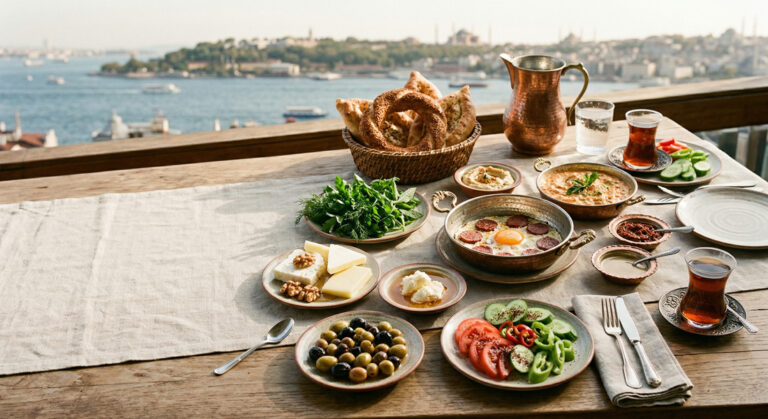
Breakfast as a ritual
In Türkiye, breakfast is not just a morning meal; it is a culture that slows the pace, makes the scenery feel more lived-in and adds human warmth to the trip.
Türkiye impresses not just through what you see but through what you taste and share. It is frequently at the table that Türkiye’s warmth is felt most clearly.
Turkey changes with the seasons
So the country’s strength is not tied to one time of year; it suits different travel aims throughout the year. One season may make it feel open, lively and sociable, another calm, layered and restorative.
A route that lives all year
The openness of spring, the coastal energy of summer, the balance of autumn and the inner warmth of winter complement one another on one map.
Spring
This is one of the most balanced seasons for cultural routes, old towns, highland roads and Aegean towns. Because weather, light and nature work in harmony, you can easily enjoy the country’s historical and scenic sides together.
Spring is also a good option for anyone visiting Turkey for the first time: until summer’s intense rhythm takes hold, many sides of the country reveal themselves in a softer, more easily grasped way.
Summer
This is the coasts’ high season. Bays, beaches, marinas, summer nights and open-air tables show a freer, lighter and more outgoing Turkey.
In summer, the sea is more than scenery; it becomes a key driver of daily life, of the hours spent strolling, of the evening rhythm and of the trip’s emotional tone.
Autumn
The pace of travel eases. City breaks grow calmer and quieter; scenic drives and cultural stops do as well, and each experience takes on more meaning. With fewer crowds, the atmosphere stands out more clearly.
Autumn brings out Turkey’s more mature, refined side, making it an especially good season for those who want to combine culture, scenery and local life.
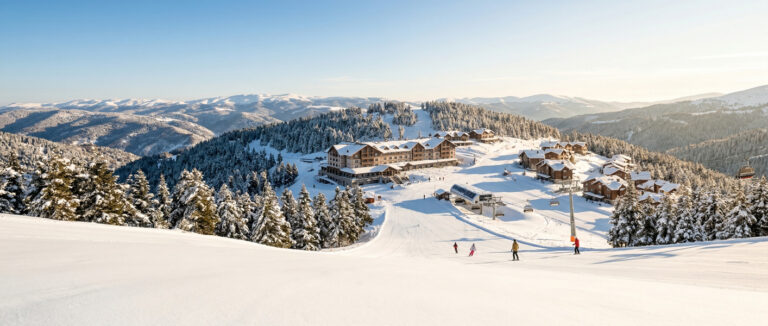
Winter
Mountain stays, city ambience, thermal areas and a slower style of travel reveal a more inward yet powerful Turkey. In winter, the country expresses itself through depth and character rather than motion.
This season offers another way to read Turkey: through thermal stops, snow-covered scenery, a calmer city experience and the warmth of indoor life. Though less outgoing than summer, it can feel more personal and more memorable.
The country is neither just a summer beach destination nor only a place for history-focused trips. Turkey’s tone shifts with the seasons, yet the richness it offers stays the same. That is exactly why it pulls you back rather than being a once-only destination.
Summer Breaks
During the summer months, the Aegean and Mediterranean coasts, bays and harbor towns, sunsets, outdoor dining and people’s daily connection with the sea make Türkiye’s appeal even clearer.
Türkiye in the warm months
Living by the sea
On the Antalya, Kaş, Fethiye, Bodrum, Marmaris, Çeşme and Alaçatı line, Türkiye appears sunnier, freer and more geared to the outdoors. In summer the country’s rhythm moves into the open, and the sea, the coast road, sunset and the table blend into one.
So a summer break in Türkiye amounts to more than beach time; it is a richer form of travel combining scenery, social life, the mood of the harbors, a light spirit and sheer vitality.
Warm summer nights
Summer life in Türkiye does not end when daylight fades. The outdoor flow that starts at sunset gathers strolling, scenery and the table into one summer memory.
This section shows how the coast intensifies the holiday atmosphere and why Türkiye becomes sunnier, more sociable and more memorable in the summer months.
Winter Breaks
Snowy landscapes, mountain ambience, city lights, thermal getaways and the warmth of indoor life make the winter months in Turkey an attractive time to travel as well.
Turkey in the cold months
A closer look at winter
Stays in the mountains, snow-covered landscapes, thermal areas, quieter city visits and an unhurried pace give Turkey’s winter a much more intimate and distinctive character.
Winter is more inward-looking than summer, but it can often turn out to be the more memorable season. That is because at this time of year the country speaks through feeling rather than display: crisp air, warm rooms, a steadier pace and an atmosphere that wraps around you.
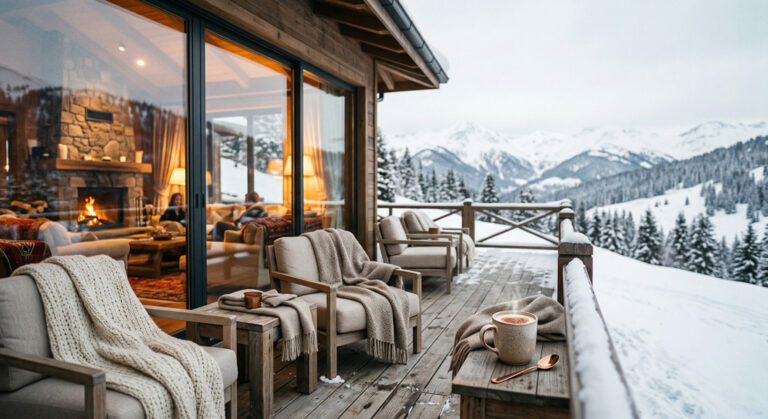
Snug winter days
A winter holiday here includes sport, but also rest, retreat and recovery. From this combination comes a richer winter experience in Turkey, one that stays in the memory for longer.
In Turkey you can clearly sense how mountain ambience, thermal comfort, city evenings and a slower rhythm add up to a strong winter experience.
Getting around with ease
A trip can move from large cities to seaside towns and from cultural routes to slower retreats while remaining easy to manage, and that is why Türkiye is a practical destination as well as an impressive one.
Easy connections
Modern airports, domestic links, easy orientation and smooth transfers between regions make the country’s great size more accessible and manageable.
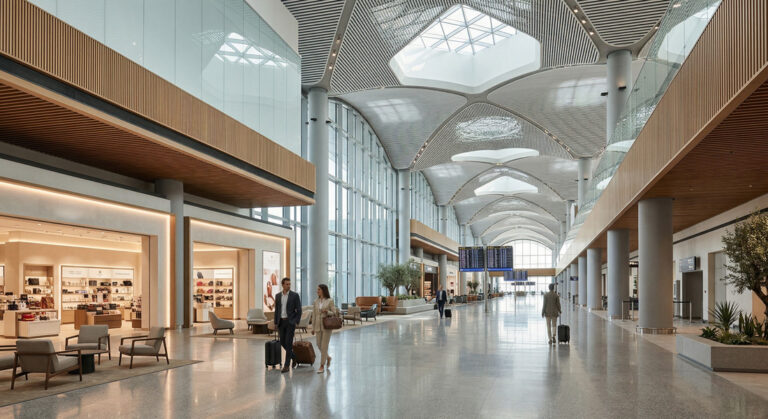
Moment of arrival
Right from the start, big airports, an internal flight network and up-to-date terminals show that the country is easy to reach and practical, not just attractive. This creates a sense of confidence as soon as the trip gets under way.
Comfort here does not simply mean luxury. What matters most is being able to continue without losing direction even as the country unfolds before you, and keeping the journey flowing when you switch from city to coast or from a cultural route to calmer stops.
Seamless links
Türkiye’s strong gateways not only make arrival easier; they also make it more feasible to bring different sides of the country into a single holiday. The result is a travel plan that feels freer and yet better controlled.
Its beauty is only part of the picture: the country also makes travel smooth, clear and easy to handle. That is why Türkiye feels comfortable and reassuring to first-timers and returning visitors alike.
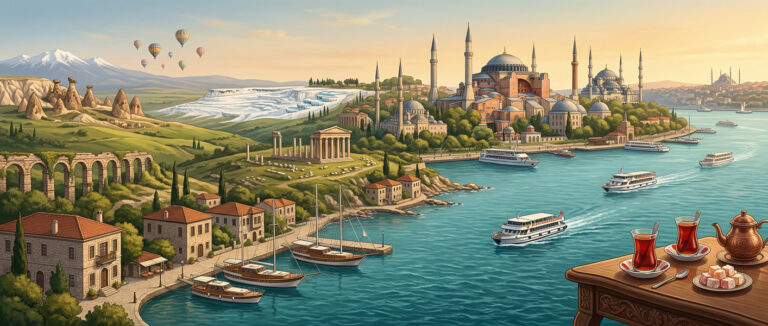
Seen as a whole
It is exactly because Turkey cannot be reduced to one type that it is so strong.City, coast, history and daily life can blend naturally into one travel memory.
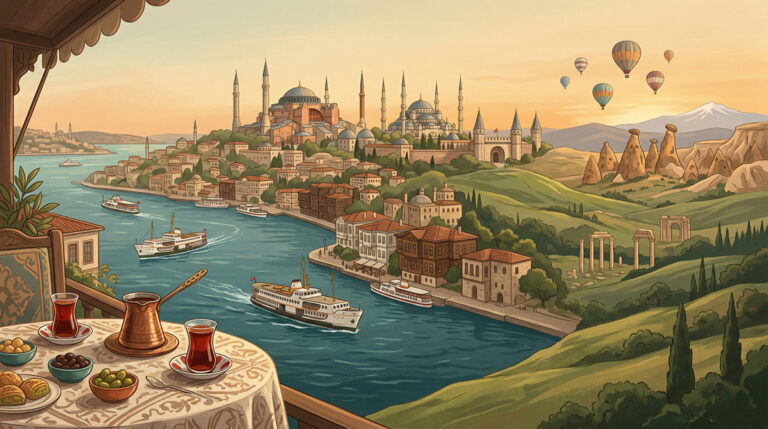
By the sea, at the table
Open space and everyday warmth can live in one scene.The feel of the coast and the intimacy of the table together convey Turkey’s airy yet human character.
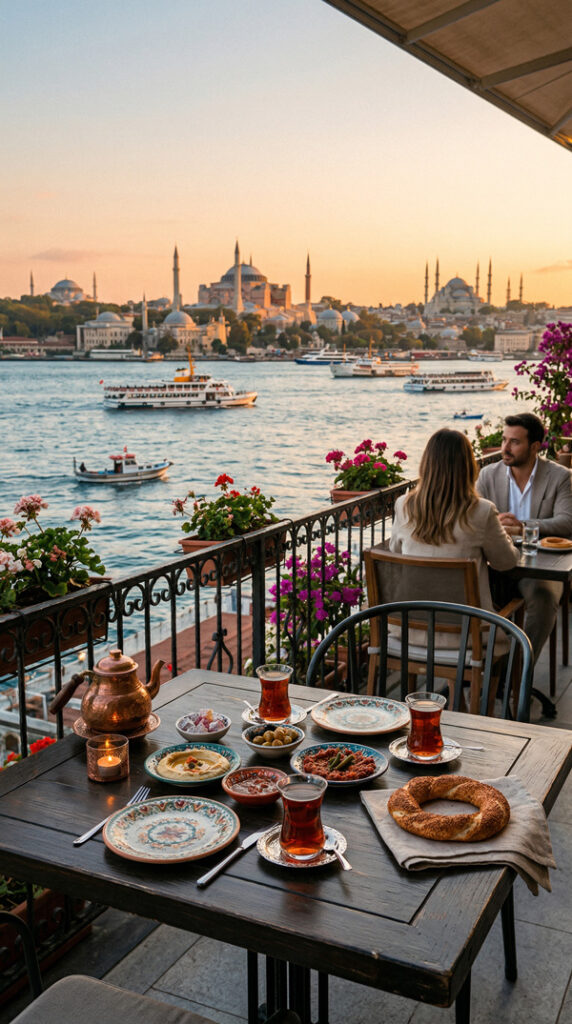
Closeness you can feel
Closeness gives the larger scale a more human feel.Through the table, the scenery and the evening light, the sense of a vast country can turn into a personal memory. This closeness also shows that Turkey is not only to be admired from a distance; seen up close it feels warmer and more human, and it is easier to remember.
Conclusion
In this country, city, coast, scenery, table, comfort and calm can all have their place in one trip without getting in each other’s way.
The tone shifts as the trip goes on, but the identity stays intact. Because big-city memories, the open coast, personal moments and restful stops can all connect within one country, Turkey often remains in people’s minds not merely as a place they visited but as an experience they want to recreate.
Turkey impresses not through one picture but through the natural way varied scales and feelings combine on a single route.
Impressions left by photographs
A handful of photographs cannot sum up the Republic of Turkey.
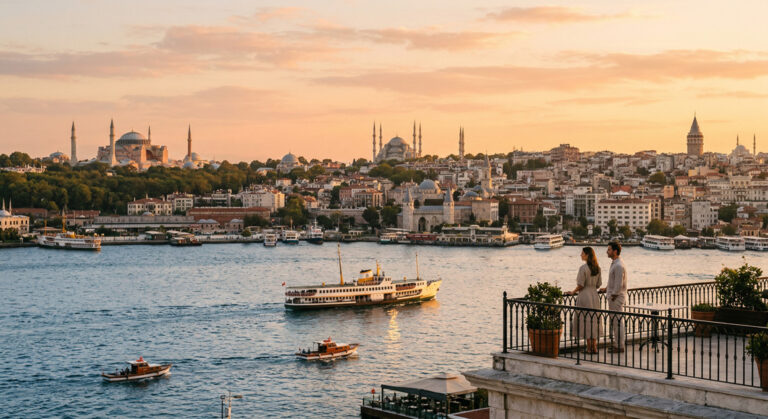
Recollections of a metropolis
Skyline and water keep the powerful first impression alive for a long while.The city feels vast, yet a human closeness comes through all the same.
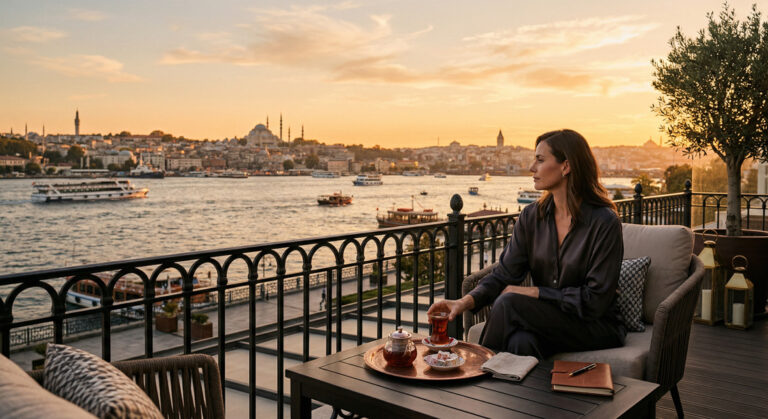
A view of one’s own
A brief moment helps a big picture endure.When the scenery comes closer to a personal rhythm, its imprint on memory becomes stronger and more intimate.
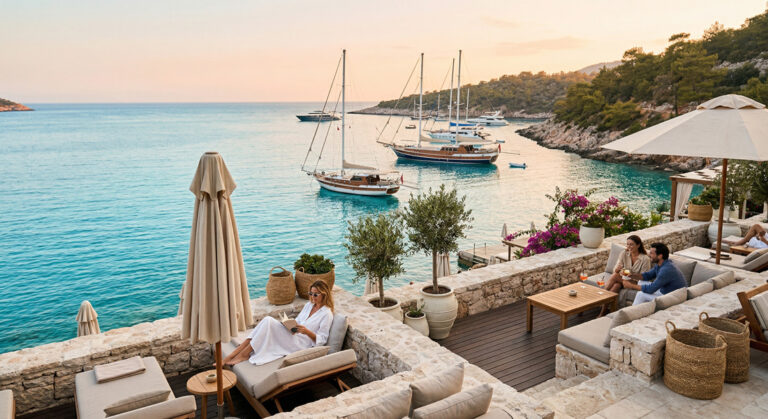
Togetherness by the water
Amid the landscape, social life takes on a stronger tone.Where the rhythm of the coast meets the feel of the table, the country’s warmer and more communal side becomes clearer.
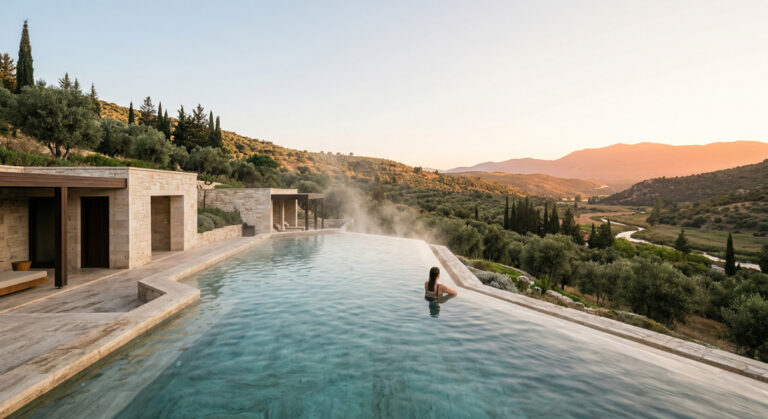
A calmer face
When needed, the pace eases and the country turns restorative.Water, quiet and scenery reveal that Turkey can be restful as well as lively.
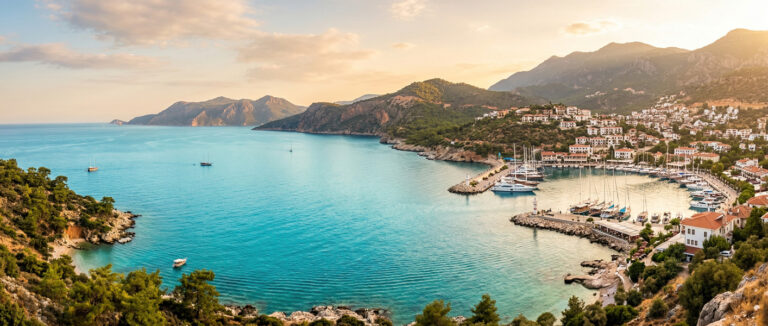
Recollections of open shores
The coastline carries the sense of space all the way to the last impression.Where the sea meets a wide horizon, the country shows its open, airy character.
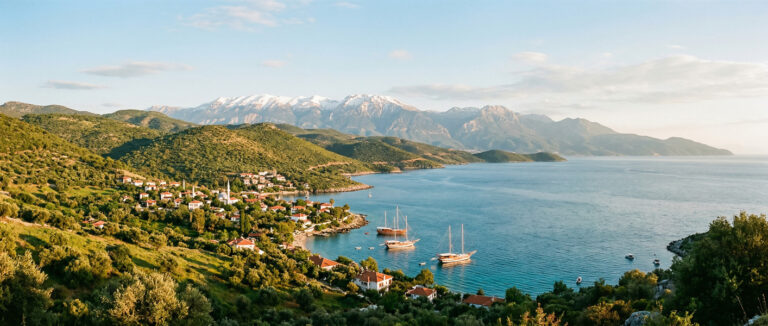
Where blue meets the horizon
The coastal rhythm can continue without weakening the power of the landscape.When sea and mountain lines act together, even the gentler side stays powerful.
Turkey, a country that lingers in the mind
Turkey can never be defined by one photograph. Even collecting Turkey’s must-see places into illustrations is often not enough. The Republic of Turkey has a deep history and covers a territory far too large for photographs to capture in summary.
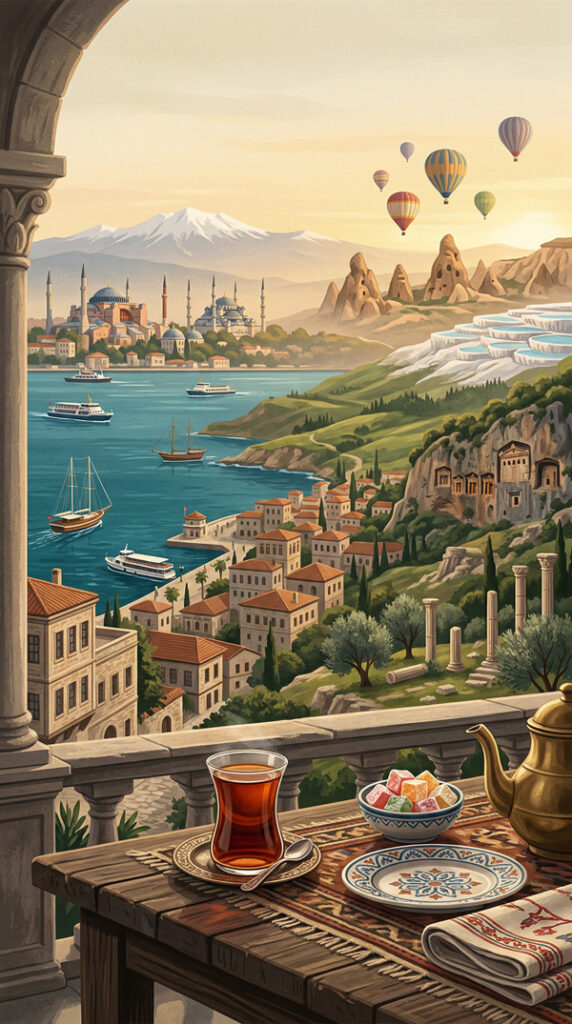
The aspect in which the city and the current share one memory.
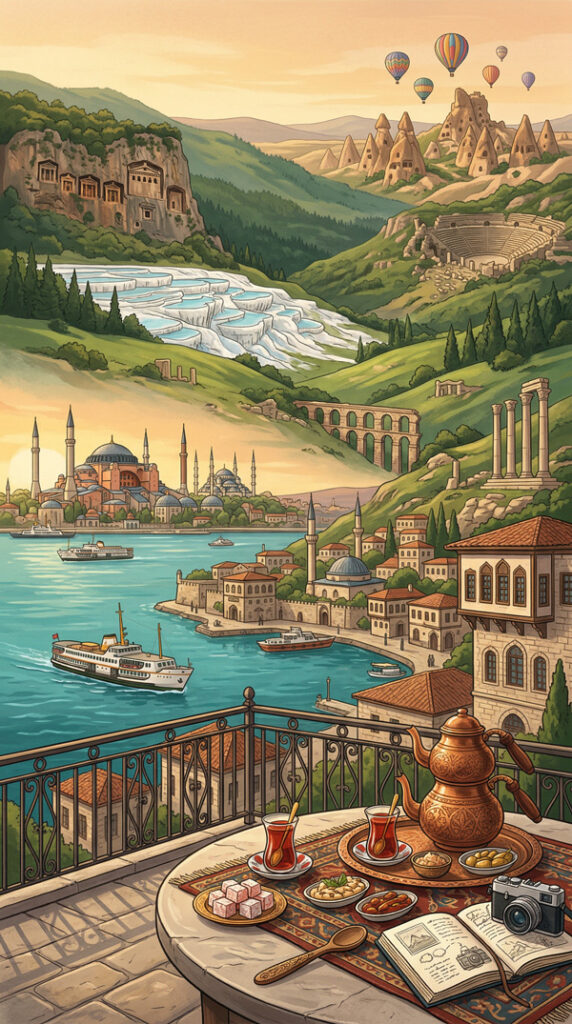
The aspect in which scenery and motion follow one line.
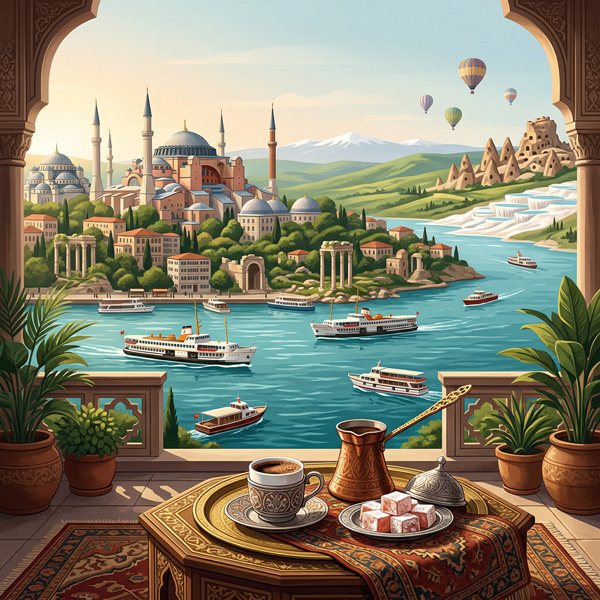
At a single glance, various layers can support one another.
What stays with you is often a series of strong, connected moments rather than one photo. When city, coast, table, calm and the sense of transition merge into one memory, the effect intensifies.